Skydiving for Beginners: 6 Essential Questions to Know
Skydiving for beginners in India has never been more accessible. Skyhigh India, established in 2016, has emerged as India’s only international standard civilian skydiving facility with a 100%safety track record. But accessibility alone is not enough. Your first jump is only as good as the operator you choose and the questions you ask before you book. But accessibility alone is not enough. Your first jump is only as good as the operator you choose and the questions you ask before you book.
At Skyhigh, we believe every beginner deserves clarity before courage. This guide covers the 7 essential questions you must ask before booking your first skydive in India, so your freefall is everything you imagined it would be.
1. Is skydiving in India safe for beginners?
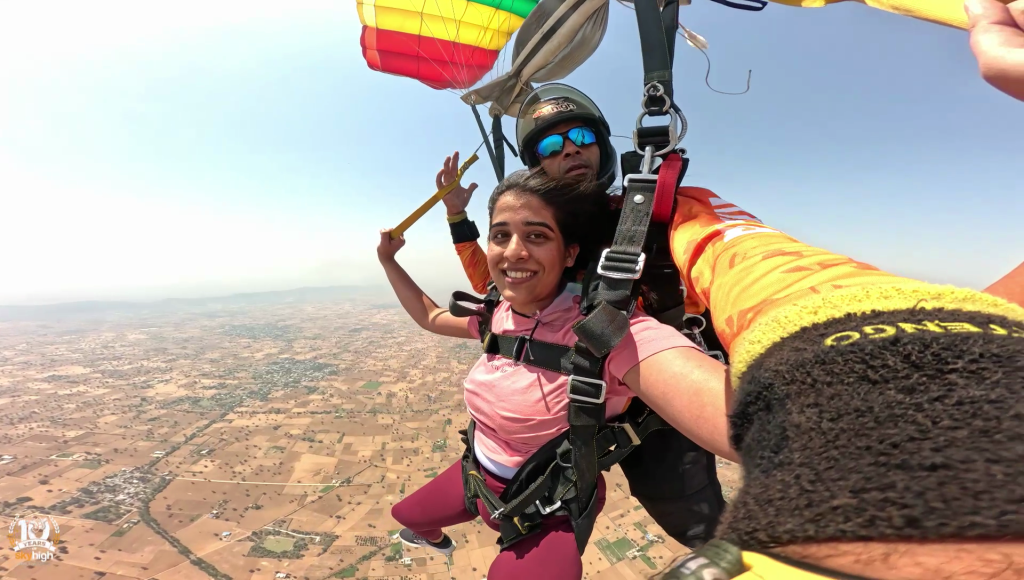
Safety is the first question every first-time skydiver asks, and rightly so. The short answer is yes, skydiving in India is 100% safe for beginners, provided you choose a certified, reputable operator like Skyhigh India.
Tandem skydiving for beginners is the standard and safest entry point for skydiving for beginners in India. You are harnessed to a fully qualified instructor throughout the entire jump from exit to landing. You require no prior experience, no special fitness level, and no technical knowledge. Your instructor manages every aspect of the jump; your only responsibility is to enjoy the experience.
At Skyhigh India, every jump is conducted under full regulatory compliance. Our equipment undergoes routine inspection, our instructors are internationally certified, and our safety protocols are reviewed on a continuous basis because we believe that a truly safe skydiving experience for beginners in India begins long before you board the aircraft.
2. What qualifications should your instructor have?
Your instructor is the single most important factor in skydiving for beginners. Before you book, go beyond the brochure and ask specific, direct questions about the person who will be harnessed to you at 10,000 feet.
How many jumps has your instructor completed? A qualified tandem instructor must complete a minimum of 1000 solo jumps before earning a tandem rating. At Skyhigh India, our instructors comfortably exceed this threshold and continue to log jumps regularly to maintain their currency and sharpness. Skyhigh India has a minimum experience threshold of 200 tandems before qualifying to be an instructor at the facility.
What does the pre-jump briefing cover? A responsible operator will always provide a structured ground training session before your jump. This covers body position, exit procedure, freefall posture, and landing technique. If an operator skips or rushes this step, treat it as a serious red flag. For anyone exploring skydiving for beginners in India, a thorough briefing is not optional; it is a fundamental part of a safe and confident jump.
What is the emergency protocol? Your instructor will be trained and current in emergency procedures, including reserve parachute deployment and malfunction response. Do not hesitate to ask. A confident, professional instructor will welcome the question without reservation.
3. What should you ask about equipment and weather?
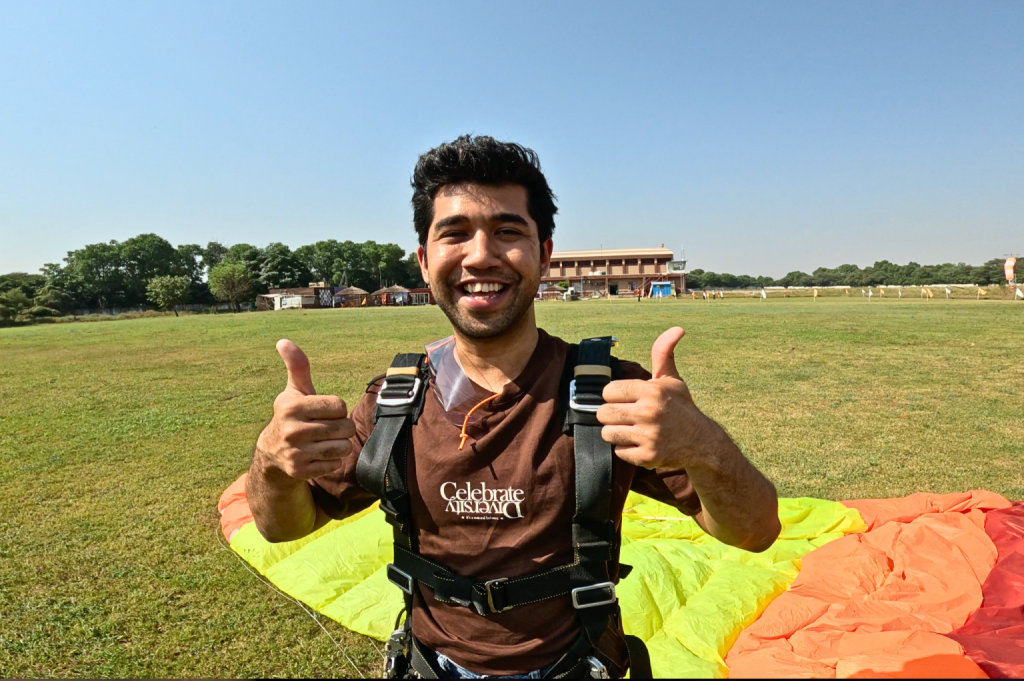
The quality of your equipment and the conditions on jump day are non-negotiable factors in a safe skydive, especially for those new to skydiving for beginners in India who may not yet know what to look for. Ask these questions before you commit to any booking.
What parachute system is used? Every tandem rig must include a primary parachute and an independently packed reserve. Ask when the reserve was last repacked by regulation, it must be repacked every 180 days by FAA certified rigger.
What are the weather minimums? Responsible operators follow strict wind speed and cloud cover limits before clearing any jump. At Skyhigh India, we never compromise a jump for commercial reasons. Safety always takes precedence over schedule.
When is the best time to skydive in India? For beginners, timing your first jump well makes a meaningful difference to the overall experience. Monsoon months June through September typically see operations suspended across most drop zones, so plan your booking accordingly.
4. How much does skydiving cost in India?
Skydiving for beginners in India is considerably more affordable than in Dubai or Europe or North America, making it one of the most accessible ways to experience skydiving for beginners without stretching your budget. However, price should never be the primary deciding factor particularly for an activity where safety is paramount.
A standard tandem skydive in India typically ranges from ₹25,000 to ₹40,000, depending on the location, altitude, and package. This usually covers your jump, ground training, and basic equipment use everything a first time skydiver needs to get safely and confidently into the air.
At Skyhigh, our pricing is transparent and all inclusive. We believe skydiving for beginners in India should know exactly what they are paying for and exactly what standard of experience they will receive in return.
5. What should you expect on jump day?
Knowing exactly what to expect on the day goes a long way in managing nerves and making the most of your experience. Here is a clear, step-by-step timeline of what a typical Skyhigh India jump day looks like for anyone new to skydiving for beginners in India. Arrival and registration: 30-60 minutes.
You will check in, complete your medical and consent documentation, and be introduced to your assigned instructor. Wear comfortable, weather-appropriate clothing and closed-toe laced shoes. Leave jewellery, watches, and loose accessories at home.
Ground training: 45 to 60 minutes. This is the most important part of the day. Your instructor will walk you through body position, the exit sequence, freefall posture, and landing procedure in detail. Ask every question you have during this time; this is precisely when they belong.
Gearing up: 15 minutes. Your harness will be fitted, checked, and double-checked. You will receive a final briefing before boarding the aircraft.
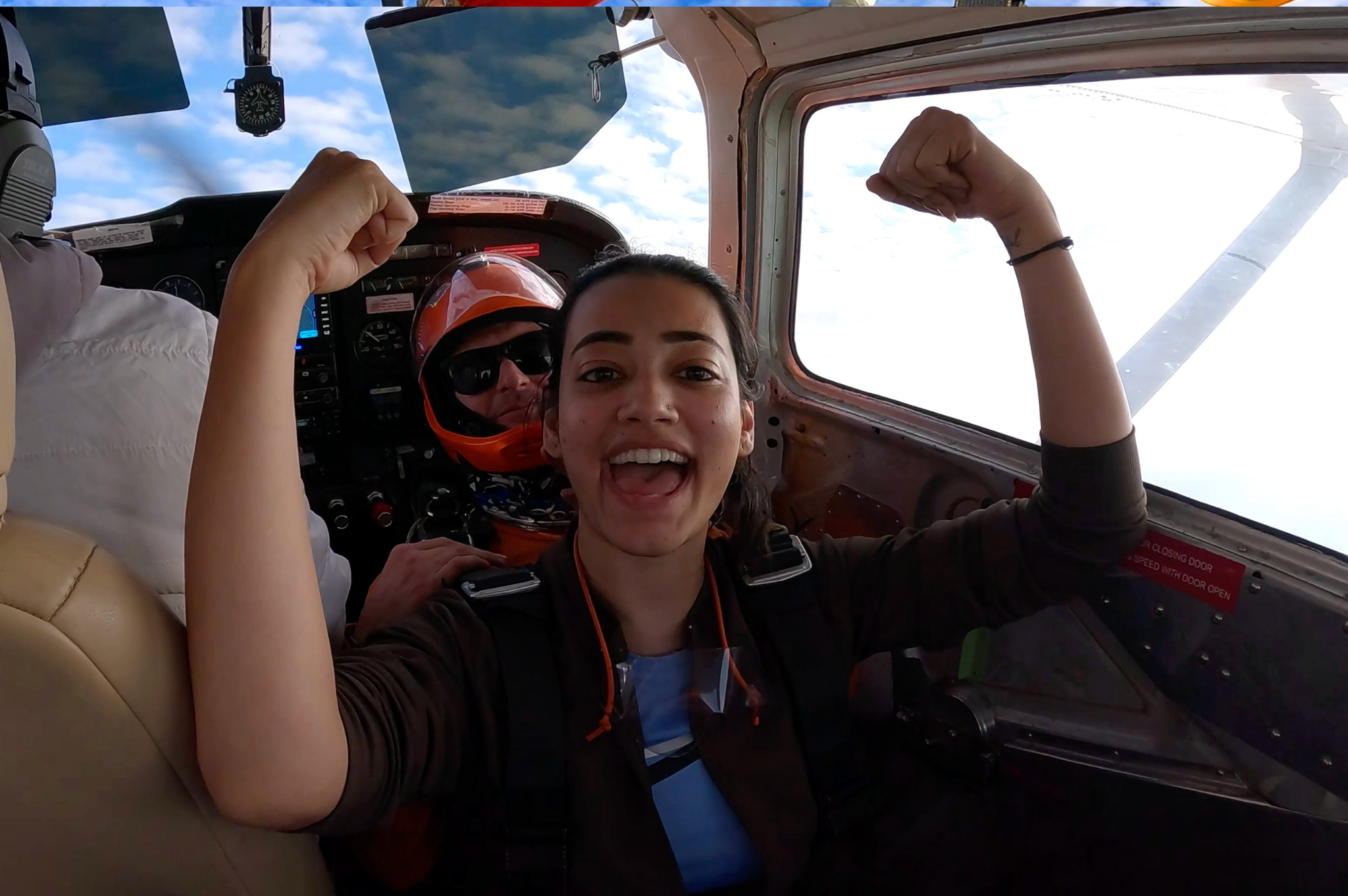
Ascent to altitude takes 15 to 20 minutes. The aircraft climbs to 10,000 feet, depending on your chosen jump package. Use this time to settle your breathing, take in the view, and trust your training.
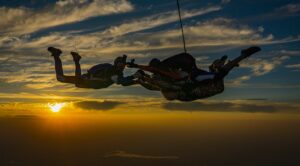
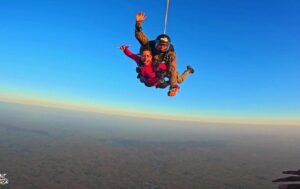
Freefall: 30 – 45 seconds, depending on weight; the heavier people come down faster, and lighter people tend to get more freefall. The most exhilarating part of the experience. At terminal velocity, you will feel the full force of the open sky raw, loud, and completely unlike anything else.
Canopy ride: 5 to 7 minutes. Once the parachute deploys, the rush gives way to a quiet, panoramic glide back to the ground. Many first-time jumpers describe this as an unexpectedly peaceful moment to take in India from a perspective very few people ever see.
Landing and debrief. Your instructor will guide you through a smooth, controlled landing. Afterwards, you will review your jump video and, in most cases, immediately begin planning your next jump.

6. What are the age, weight and medical requirements?
In India Skydiving for beginners has a minimum age. The minimum age requirement for skydiving in India is 18 years; however, 16+ can also skydive with parental consent and a parent present at the location. At Skyhigh India, this requirement is enforced strictly and without exception.
Weight limit. Skyhigh USPA has set a weight limit of 90 kgs; heavier people can jump subject to height and body type but solely at the discretion of the instructor. If you are close to the limit or have any concerns, contact our team directly before booking. We will always give you an honest, straightforward answer.
FAQs
From what altitude will I jump, and how long is the freefall?
Jumps typically take place from an altitude of around 10,000 feet. You will experience an adrenaline-pumping freefall lasting approximately 30 to 40 seconds at speeds of up to 220 km/h, followed by a serene 5 to 7-minute canopy glide once the parachute opens.
What should I wear on the day of the jump?
Wear comfortable, athletic clothing (like t-shirts, track pants, or leggings) and sturdy, lace-up running shoes or sneakers. Avoid loose jewelry, skirts, boots with heels, or shoes with open hooks.
Is skydiving at Narnaul safe?
Safety is the top priority at Narnaul. The dropzone utilizes state-of-the-art, USPA-approved equipment, including dual-parachute systems equipped with an Automatic Activation Device (AAD), which automatically deploys the reserve parachute in case of an emergency.
What are the age and weight restrictions?
Age: The minimum age requirement is 18 years. (Minors aged 16–17 may be permitted with written parental/guardian consent with parents present there).
Weight: The standard maximum weight limit is usually 90–95 kg, depending on physical fitness and harness fit. Additional weight charges or restrictions may apply for individuals close to the limit to ensure a safe instructor-to-student ratio.
More of us