Skydiving: 4 Powerful Exercises to Prepare for Your Jump
Skydiving. Every Indian first-timer who books a skydiving experience at Skyhigh India‘s Narnaul drop zone spends time preparing in some form before the jump day.
They research the operator. They read about the safety framework. They watch videos of tandem jumps above the Haryana plains. They have the dinner table conversation where someone says something alarming and someone else says something reassuring and neither person has actually jumped. They think about what to wear, what to eat, what time to leave Delhi to arrive at Narnaul by 9:30 AM in comfortable time for ground training.
And virtually none of them have prepared the body for it which is precisely what the preparation discussion prior to skydiving never actually talks about.
No matter how you look at it. No matter whether it’s from an athletic training perspective. Or whether it is the cardiovascular conditioning aspect that we’re talking about. Because skydiving is not a physically demanding activity; it is not necessary to be very fit before undertaking it.
There are four basic exercise of these preparations. These are nor demanding but also a basic everyday task for any person, Neither require gym membership, athletic background, or more than twenty minutes of daily attention in the week before the jump.
The Skyhigh India Narnaul team of instructors consistently recognizes themselves as the variables that differentiate the most real and enjoyable first jumps from those that were remarkable in spite of the fact that the first timer’s body felt like this during them.
1. The Arch Position Hold : Building the Foundation of Stable Freefall
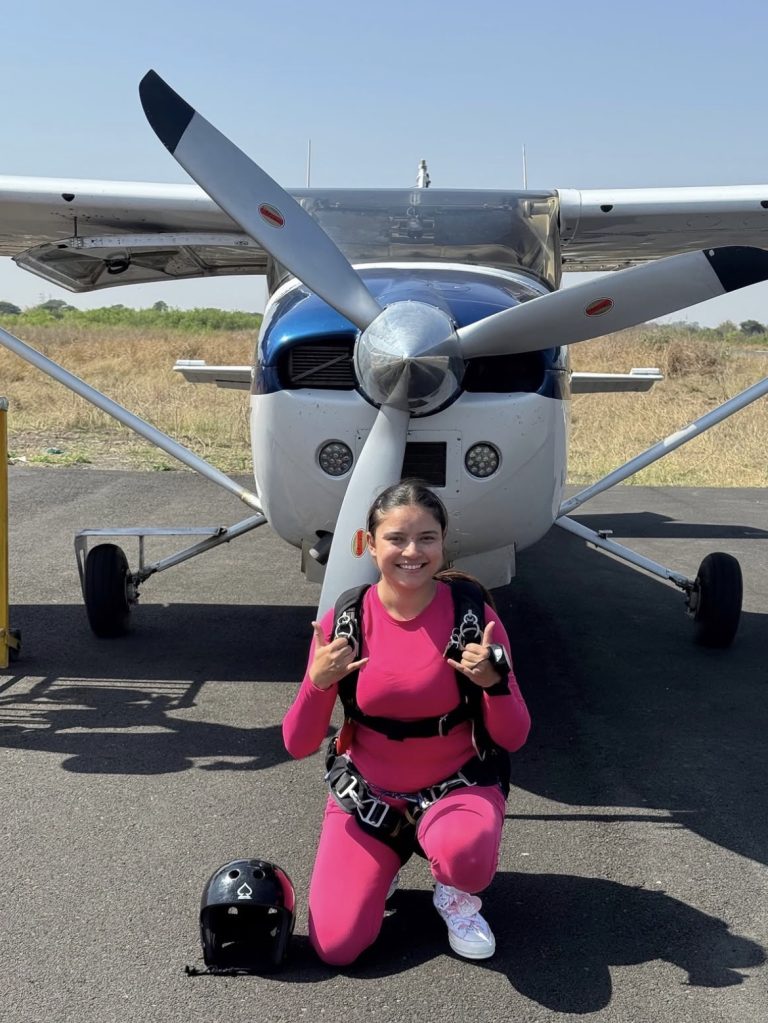
The most significant physical position in the whole skydiving process and the position that Skyhigh India takes most of the time to train its students to do correctly before even getting on board the aircraft is the arch.
The arch position is the basic body position for controlled freefall. It is the actual physical position of being in an arch position (hips forward, back arched, arms straight out to the sides, bent at the elbows, and head up) that allows for the aerodynamic stability needed for controlled freefall above the Narnaul plains.
The exercise: Lie face down on a yoga mat or firm surface. Simultaneously lift your chest off the surface, extend your arms at shoulder height with elbows bent, lift your thighs off the surface, and hold the position for thirty seconds. This is the skydiving arch. Practice holding it for thirty to sixty seconds, three to five repetitions, once daily in the week before your Narnaul jump.
2. Controlled Breathing Practice : The Tool That Transforms the Exit
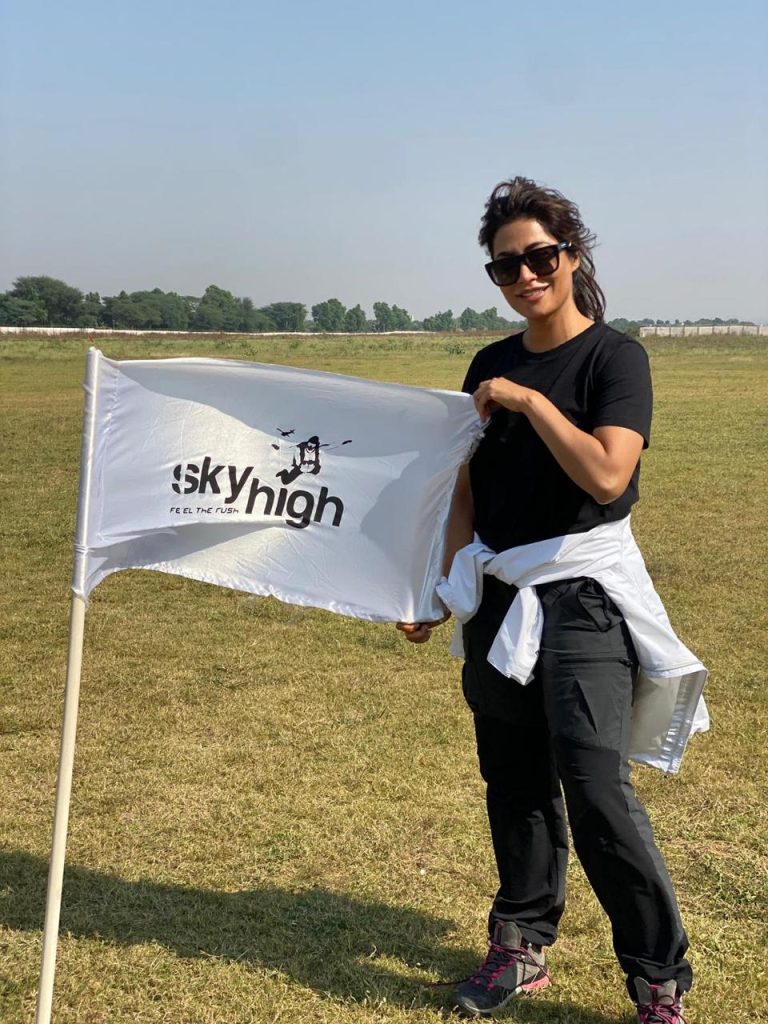
The second biggest physical prep for your first time skydiving at Skyhigh India‘s Narnaul drop zone is something that most first-timers think comes automatically, which is true, but can be greatly aided by practising ahead of time the very moment when it becomes temporarily less so.
The physiological skill of breathing during the exit and the first few moments of freefall in the sky over the Narnaul plains is something that most first-timers report as being more difficult than expected, not because breathing itself is difficult in skydiving, but because the speed and volume of air moving around you at 200 kilometres per hour takes a little adjustment period during which it becomes momentarily more difficult.
The exercise: Practice box breathing in the week before your Narnaul jump; inhale for four counts, hold for four counts, exhale for four counts, hold for four counts; repeat for five cycles. This establishes conscious respiratory control under mild stress. Then practice the deliberate single exhale: a full, controlled, conscious breath out connected to the mental image of the aircraft door at 10,000 feet above Narnaul. The body that has practised conscious breathing before the skydiving jump day produces the deliberate exhale at exit automatically rather than requiring conscious retrieval under maximum adrenaline.
3. Neck and Shoulder Mobility : For the View That Makes the Freefall
The third preparation for your first skydiving trip at Skyhigh India‘s Narnaul drop zone is the preparation that will have the greatest influence on the aspect of your experience which people who go skydiving for the first time find to be the most visually breathtaking and the one for which the least preparation is made.
Above the plains of Narnaul, the horizon opens up in all directions. The farming pattern of Haryana, the foothills of the Aravallis, the clear sky of North India all this becomes visible in all directions at an altitude which only a few people voluntarily attain. The visual experience of the skydiving freefall is one of the most amazing aspects of the sport, and this experience is available in its entirety only to the first-time skydiver whose neck and shoulder flexibility makes it possible for him to move his head around and actively interact with the visual environment around him.
The exercise: Daily neck circles slow, controlled, full-range circles in both directions, ten repetitions each way. Daily shoulder rolls forward and backwards, ten repetitions each direction. Daily doorframe chest stretches: stand in a doorframe with elbows at ninety degrees, lean gently forward until a stretch is felt across the chest and front shoulders, hold for twenty to thirty seconds. These exercises, performed once daily in the week before the Narnaul jump, reduce the desk-accumulated tension that limits comfortable head movement during the skydiving freefall and make the full 360-degree Narnaul panorama accessible without discomfort.
4. Leg Strength and Mobility for Landing
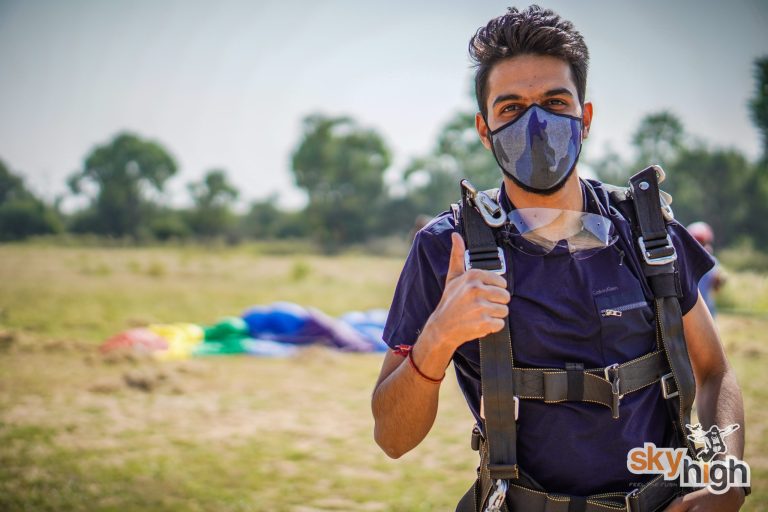
The fourth physical preparation for your first skydiving experience at Skyhigh India‘s Narnaul drop zone is the most practically protective of all seven because it directly addresses the physical capability that the skydiving landing at the Narnaul landing field requires, and that occasional first-timer discomfort during landing is directly attributable to its absence.
The Skyhigh India tandem landing at Narnaul is smooth and instructor-managed. The first-timer’s key contribution is the leg lift raising both legs parallel to the ground for landing. The instructor’s position lets them manage the landing while the first-timer is carried through the flare and slides to a stop on the grass.
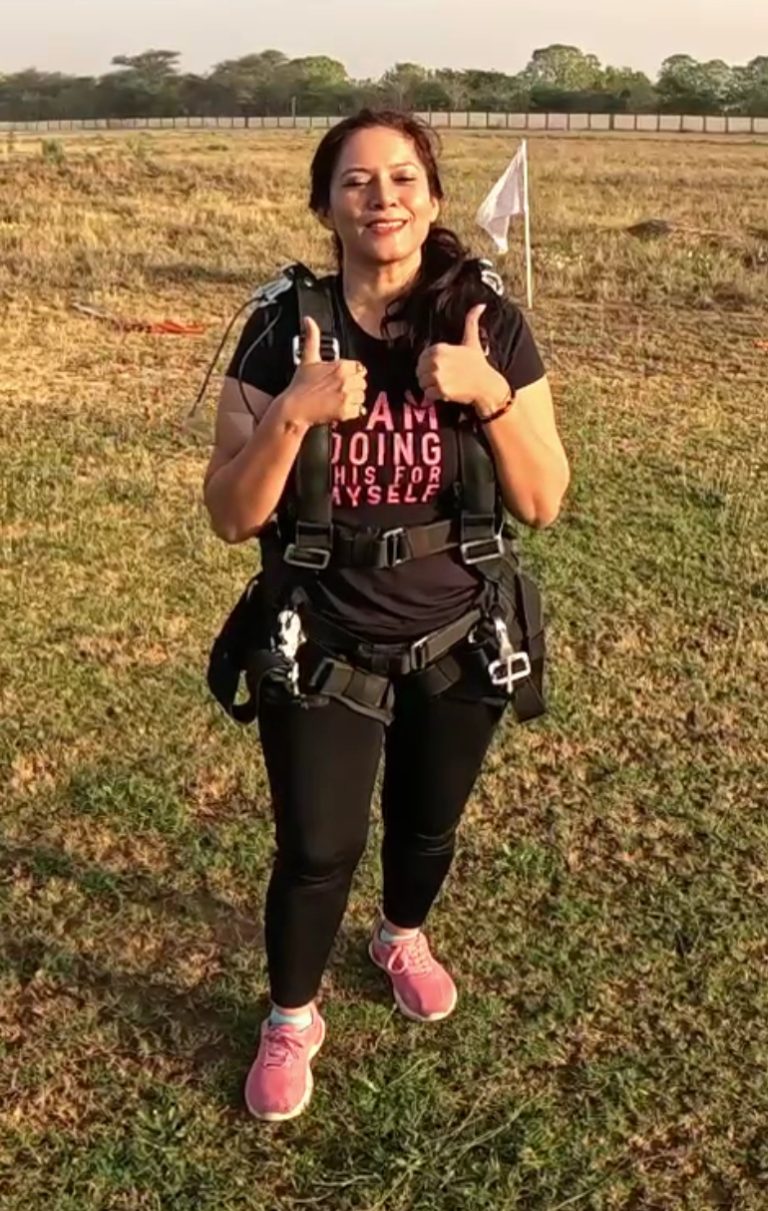
The leg lift requires sustained hip flexor activation for the final ten to twenty seconds of the canopy approach. For most healthy adults, this is not a significant demand. For first-timers whose hip flexors are shortened and weakened by extended periods of seated desk work which describes the majority of Delhi NCR professionals who choose to skydive in India at Skyhigh India‘s Narnaul drop zone the sustained leg lift can be more physically demanding than anticipated, particularly in a state of post-freefall adrenaline saturation when the body’s available physical reserves are already significantly engaged.
The exercise: Daily seated leg raises sit on the edge of a chair, extend one leg straight out parallel to the floor, hold for ten seconds, lower, and repeat with the other leg. Ten repetitions each side, once daily. Daily hip flexor stretches low lunge position, front knee above front ankle, back knee on the floor, hips pressed gently forward, hold for twenty to thirty seconds each side. These exercises develop the specific hip flexor strength and mobility that the skydiving landing leg lift requires and that the typical Delhi professional’s seated work life reduces over time.
FAQs
Do I need to be physically fit for skydiving at Skyhigh’s Narnaul drop zone?
No. Skydiving at Skyhigh’s Narnaul drop zone places no intense athletic demands on the participant. The physical requirements are minimal and center entirely on your ability to hold a basic body arch position during freefall stability and lift your legs comfortably to your chest for a soft landing approach.
How long before my skydiving jump should I start these exercises?
The core preparation movements are designed for the week immediately preceding your Narnaul jump day. Dedicating just one week of daily, short practice sessions develops the specific physical familiarity and muscle memory that your tandem skydiving experience calls upon.
What is the most important exercise for skydiving preparation?
The most vital movement is the arch position hold (often called the “banana position”). This is the fundamental physical posture required for stable tandem freefall. Practicing this core-strengthening position at home in the week before your jump makes the form feel significantly more natural, relaxed, and comfortable once you enter the actual freefall environment.
What physical preparations does Skyhigh’s Narnaul ground training cover?
Skyhigh’s mandatory pre-flight ground training at the Narnaul drop zone thoroughly covers:
- The arch position for optimal freefall stability.
- Proper breathing techniques during the initial aircraft exit and freefall.
- Understanding the harness connection points and their structural role.
- The exact physical exit sequence from the aircraft door.
- In-flight altitude awareness indicators.
- The crucial leg lift sequence for a smooth landing approach on the drop zone grass.
More of Us