Skydiving Thailand : 5 Shocking Truths Indians Should Know
Skydiving Thailand has rightly earned its reputation amongst Indian adventure seekers. For the Indian traveller who has visited Bangkok or Pattaya, or will be visiting these places anytime soon, the idea of including tandem skydiving in their tour becomes an obvious choice that takes the experience of travelling one step further.
However, for an Indian first-timer who intends to visit a place just for skydiving Thailand, and who would be thinking about the flight tickets, visas, and everything else solely because of skydiving, things would become far from easy as they may look in those pictures.
At Skyhigh, we appreciate what skydiving in Thailand really offers. Skydiving over the Gulf of Thailand from 15,000 feet can definitely be termed magnificent. But here’s a shocking truth regarding skydiving in Thailand. Indian first-timers often end up paying three to five times more than required, handling foreign logistics and arriving at the foreign drop zone exhausted from their international travel, just to miss a great skydiving experience right here in India.
Skydiving Thailand vs Skyhigh India Quick Comparison Snapshot
| Category | Skydiving Thailand | Skydiving at Skyhigh India |
|---|---|---|
|
Base jump price |
THB 12,000-18,000 (₹28,000–₹42,000)
|
₹30,000–₹35,000
|
|
Total cost for Indians
|
₹80,000–₹2,00,000 (inc. travel)
|
₹25,000–₹40,000
|
|
Altitude |
15,000 ft
|
10,000 ft
|
|
Landscape
|
Gulf of Thailand coastal view
|
Indian landscapes
(Narnaul) |
|
Travel requirement
|
International flight + Thai visa
|
Day trip no travel required
|
1. Skydiving Thailand Costs Indian First-Timers 3-5 Times More Than Skyhigh India
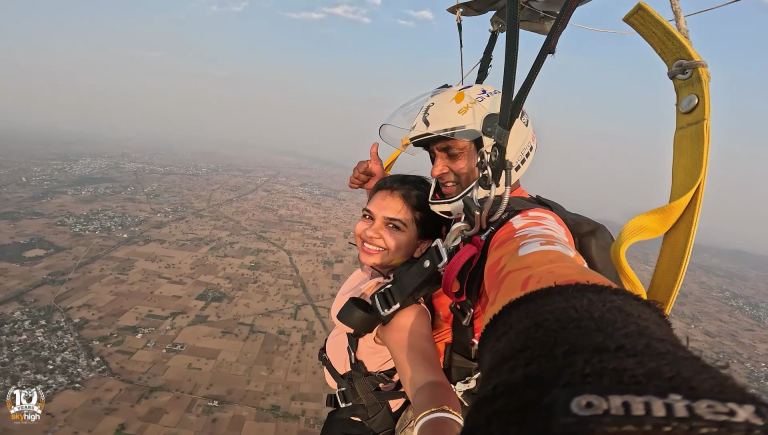
The shock: The skydiving Thailand base jump seems to be reasonable when put side by side with Skyhigh India in terms of its price, as shown in the figure comparison below. The total price for Indian tourists is a totally different story.
The truth: Price for a round-trip international flight from a major Indian city to Bangkok, the gateway airport for skydiving in Thailand experience, starts from ₹15,000 to ₹50,000, depending on origin city, booking advance, and season. A Thai tourist visa will cost ₹2,500 to ₹5,000 for processing. Two days’ stay in Pattaya in a midrange hotel will cost ₹8,000 to ₹25,000.
When all these costs are added up, the total cost of skydiving Thailand for Indian first timers on a dedicated trip varies from ₹80,000 to ₹2,00,000, for the same sixty seconds of free fall, the same tandem, and the same parachute system that Skyhigh India provides for ₹25,000 to ₹40,000 all-inclusive.
Conclusion: The skydiving Thailand experience for Indian first timers is three to five times more expensive than Skyhigh India for the same sixty seconds of free fall. Every rupee extra is spent on the travel, not on the adventure.
2. Thailand's Monsoon Closes Skydiving for 6 Months India's Network Does Not
The shock: Skydiving Thailand’s operating period is limited because of Thailand’s monsoon season, which closes or seriously limits operations at Pattaya and at other Thai destinations up to six months each year.
The truth: Monsoon season in Thailand starts from about May until October, six months during which abundant rainfall, high winds, cloudiness, and atmospheric instability make skydiving Thailand impossible or highly restricted in most certified destinations in the country. This makes the operational period for Skydiving Thailand to be limited to November through April, the dry season, five to six months a year.
As Skyhigh India uses a multi-location approach in its skydiving program, operational periods become spread among various seasonal periods. October through February is an ideal season for most of Skyhigh locations, but the total operational period of the company becomes eight to ten months per year, which ensures a possibility of making a jump in almost any month of the year.
Conclusion: Skydiving Thailand provides a five to six-month period during which operations can take place, and pricing reaches its peak when Indians prefer to visit the country. Skyhigh India can organize skydiving for eight to ten months a year.
3. Skydiving Thailand Offers One Foreign Landscape Skyhigh India Offers Five Extraordinary Ones
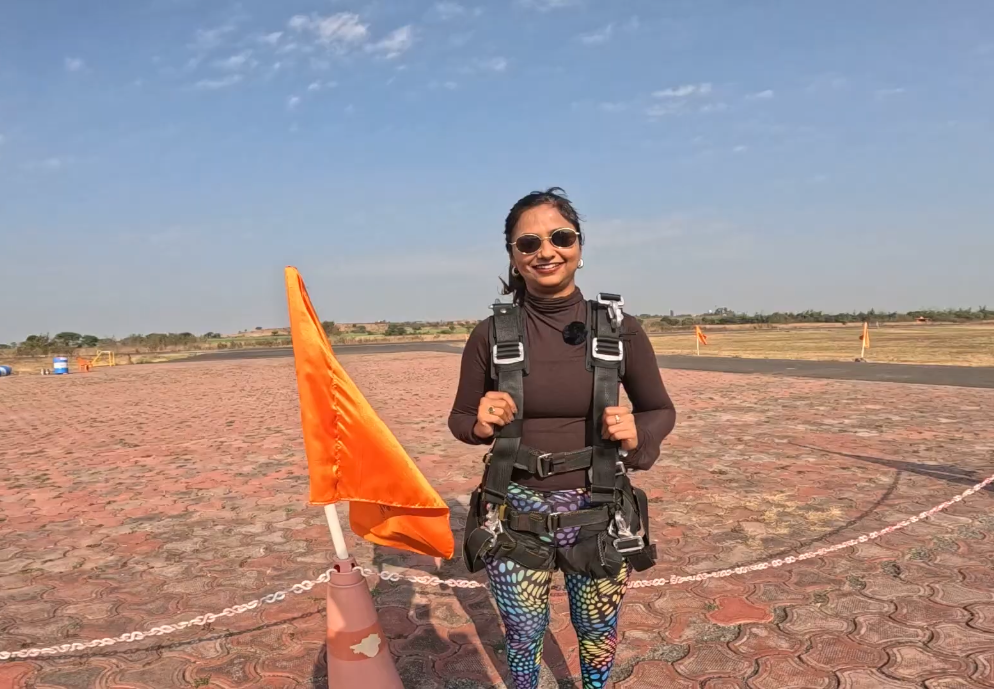
The shock: Thailand skydiving‘s famous tropical coastal view, the Gulf of Thailand’s blue waters, Pattaya’s coastline, and the tropical scenery stretching out into every horizon is breathtakingly beautiful. It is also singular, non-diverse, and for Indian first-timers, something that belongs completely to some other place, some other geography, some other tale.
The truth: The aerial view of Thailand skydiving is the same view from any jump done from the same location. Regardless of how spectacular the view is, it is the same view of the same scenery from every skydiving jump done in Thailand. The second jump done in Thailand will offer the same view as the first. And the third jump will be similar in scenery to the second. The Thai coastlines are indeed beautiful, but they are not diverse, and diversity is one of the best arguments in skydiving in India.

Apart from the landscape diversity, there is an element of memory value associated with jumping from above India that cannot be found when one chooses to skydive in Thailand as a beginner in India. The landscape underfoot is your landscape in terms of its familiarity, memories, and personal connections, which the coastline of the Gulf of Thailand lacks access to.
Skydiving Thailand provides you with a scenic view of a foreign country in the form of a picturesque postcard. However, Skyhigh India provides you with the amazing experience of viewing your native land, your landscape, and your skies from above.
Conclusion: Skydiving Thailand provides you with a single scenic view of a foreign country. On the other hand, Skyhigh India provides you with five unique jump locations, each of which is yours in a way that a foreign country cannot provide you with.
4. Language Barriers at Skydiving Thailand Create Safety Risks Most Indians Overlook
The surprise: Training, briefings, jump instructions, and in-flight communication in skydiving activities in Thailand are done in English with a Thai accent, a situation that has not crossed the minds of most Indian novices and one that will impact the quality of the skydive.
The reality:Ground training is no formality. At Skyhigh, our ground training sessions take forty-five to sixty minutes. The sessions include body positions on exit and during the freefall, correct posture during terminal velocity, breathing techniques, and landing techniques. Each bit of information you learn during these sessions makes a huge difference to the safety and enjoyment of your first skydive.
Ground training at Skyhigh India is done by instructors who have the same cultural background, the same language, and usually the same fears of Indian first-timers. Our crew provides the briefing in Hindi, English, and in other regional languages where necessary because we think that every first-timer stepping on a Skyhigh plane should know everything he was supposed to know before he stepped through the door.
Verdict: Language issues at skydiving Thailand do not simply create difficulties with communication. They also pose a danger to your safety and affect the quality of the experience. These problems do not exist in Skyhigh India at all.
5. Skydiving Thailand's International Logistics Drain the Experience Before It Begins
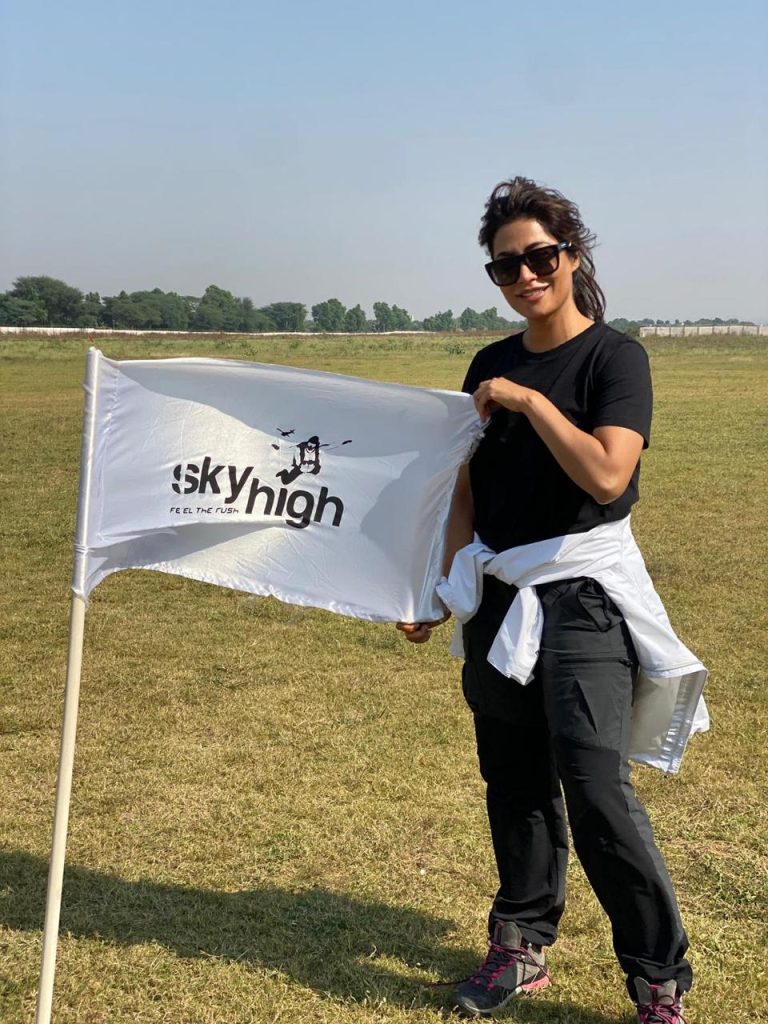
The shock: The complete weight of logistics associated with an international trip for skydiving in Thailand, the Thai visa, international flights back and forth, navigation at Bangkok Airport, the multi-hour drive to Pattaya, new accommodation, handling of a foreign currency, and dealing with language issues everywhere along the way leaves behind the fatigue of traveling that noticeably detracts from the quality of the first-time skydiving experience.
The truth: The quality of the first time skydiving experience depends not only on how things go up in the air. It depends on the whole day cycle starting from getting out of bed on jump day until the training on the ground, climbing into the plane, making the jump, falling down, and landing. And all those stages will be much better, more focused, and enjoyable if you are ready and energized when you come to the drop zone.
Verdict: Skydiving Thailand means adding an extra three or four days to the schedule to deal with international travel logistics, while Skyhigh India provides the same world-class first-time skydiving experience in just one day!
Conclusion
Five shocking facts. One conclusion
Skydiving Thailand is an exceptional experience in an exceptional country. This guide has made no argument to the contrary, and it won’t begin here either. If you happen to be visiting Thailand on other business, and skydiving opportunities at Skydive Pattaya or Chiang Mai open up in your travel plan, take advantage of them. Seeing the Gulf of Thailand from 15,000 feet should be high on anyone’s bucket list.
But if you are Indian, and it is your first time, and you are considering making a skydiving trip, and looking at international versus domestic opportunities to make the most informed decision possible, there is nothing here that can be argued.
Skyhigh India has all the elements that skydiving Thailand has altitude, freefall, safety, breathtaking view at a fraction of the total cost, without a passport, in your own language, flying over your own beautiful country.
FAQs
Q 1. Is skydiving in Thailand cheaper for Indians than jumping at Skyhigh India?
While the base jump price in Thailand might look attractive, once you factor in international flight costs, visa fees, and currency conversion, the total expenditure is significantly higher. Skyhigh India offers a world-class experience at a transparent price without the hidden “tourist taxes” often found abroad.
Q 2. Are safety standards in Thailand better than in India?
This is a common misconception. Indian skydiving operations are governed by strict DGCA guidelines, which are often more rigorous than those at the commercialized, high-volume “tourist” drop zones in Southeast Asia. In India, safety is a legal mandate, not just a recommendation.
Q 3. Will I face a language barrier during the safety briefing in Thailand?
Yes, and in a high-risk sport, communication is everything. Many Indian divers find that technical safety instructions in Thailand can get lost in translation. Jumping in India ensures your pre-jump briefing is conducted in clear English or Hindi, making sure you understand every hand signal and emergency protocol perfectly.
Q 4. Can I jump in India if I am under 18?
India’s age policies vary by operator and are often flexible with 16+ allowed only under specific parental consent protocols.
Q 5. Why are smart Indians choosing domestic drop zones over Thailand?
Beyond the cost and safety, it’s about the logistical realities. If bad weather cancels your jump in Thailand, you’ve lost your international flight and hotel investment. In India, rescheduling is significantly easier, cheaper, and supported by local customer service that completely understands the Indian traveler’s needs.
More of Us


