Tandem Skydiving : 4 Powerful Reasons It Feels Safer
Everyone who jumps for the first time comes to the same decision at the end of their research. It is not about making the decision to do a skydive, because it is usually already taken by the vast majority of potential jumpers before they start researching. The decision is tandem skydiving. And it is not an easy decision just to make everyone happy. This is the decision that the entire skydiving community, including instructors, regulators, aircraft operators, and experienced skydivers in every country, came up with on their own.
Tandem skydiving is not the simplified version of skydiving. This is the engineering solution, which is the format created specifically to give the real free-fall experience to every first-timer, regardless of skills, physical condition, and previous knowledge, in the safest possible manner.
At Skyhigh, we have done so for thousands of first-time skydivers in all the most unique spots of India. In this guide, we will share the 4 most proven facts of why tandem skydiving is the right way to do a skydive for the first time.
1. Tandem Skydiving Eliminates Every Technical Barrier Between You and Freefall
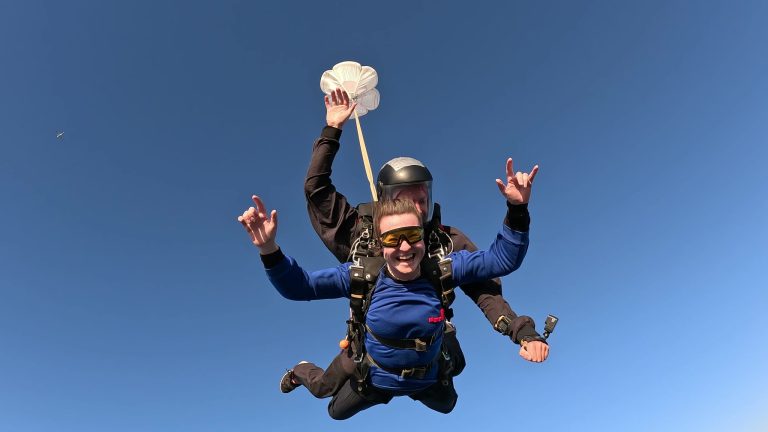
The tandem skydiving is a parachuting system whereby a beginner skydiver is attached to an experienced instructor using a special harness and jumps off the airplane while experiencing total free fall before landing using the parachute, with the instructor being responsible for all technical aspects of the jump.
The tandem skydiving system was not invented as an escape route for lazy beginners. The system was invented deliberately for the sole purpose of eliminating technical requirements that might deny a beginner any chance of experiencing freefall.
This was totally changed by tandem skydiving. By putting all the technical requirements, such as parachute deployment, height regulation, emergency measures, canopy control, and landing techniques in the hands of the instructor, tandem skydiving gave the beginner skydiver the chance to concentrate on doing one thing: experiencing the event. You are not a passenger in the tandem skydiving system. You are the event. The instructor is the person ensuring that your experience is what it ought to be.
2. Tandem Skydiving Delivers the Complete Freefall Experience Without Years of Training
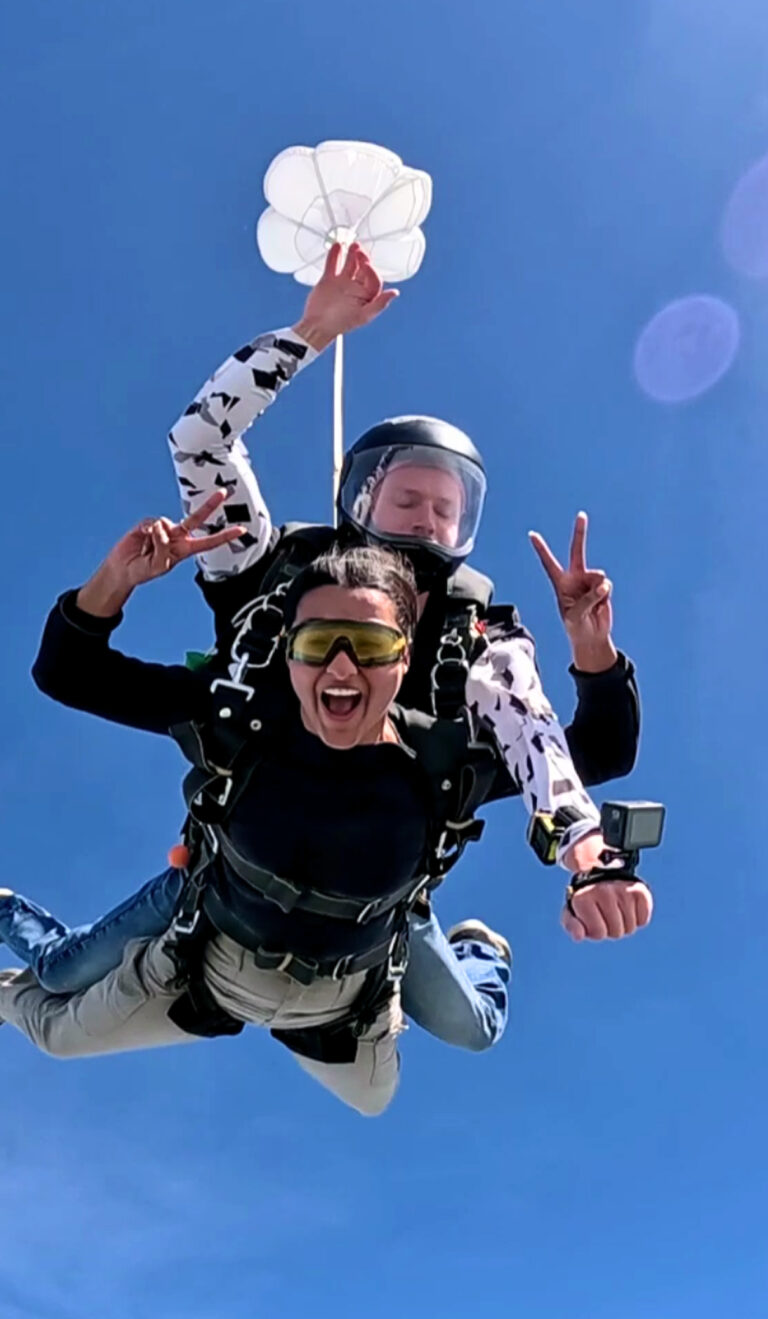
One of the biggest misunderstandings of tandem skydiving among people doing it for the first time is the belief that this type of jumping is inferior to the real thing due to the influence of an instructor or lack of individual control during the free fall.
The skydiving program offered by Skyhigh takes place at an altitude of 10,000 feet above ground, where it becomes possible to see the curve of the horizon and understand the scenery below only from such a great height. At this height, the free fall lasts thirty-sixty seconds, allowing time to get over the first shock of the jump and to feel what it means to be in freefall over India.
And the canopy ride, lasting up to five to seven minutes of silent descent, is the one that most first-time jumpers find the most unexpected part of the tandem skydiving. You glide through the Indian scenery in absolute silence, breathing calmly and looking at all the landscapes below you with the clarity that is hard to describe. This is not a diminished form of skydiving; this is skydiving in its entirety.
3. Tandem Skydiving Is the Most Cost-Effective and Accessible Entry to Freefall Available
An entry-level tandem skydiving package offered by Skyhigh India costs anywhere from ₹25,000 to ₹40,000 all-inclusive, with no additional expenses to worry about on the day of the event. This price includes your ground training class, your licensed instructor, the safety gear for the tandem skydive, your skydiving experience 10,000 feet above the ground, and the Skyhigh skydiving certificate.
Tandem skydiving does not require any purchasing of equipment on your part. Parachute, harness, altimeter, helmet no piece of equipment is provided with the Skyhigh package. No medical fitness certificates are required beyond the general information about one’s health status. No special training is necessary other than the ground training class of approximately forty-five minutes to one hour before your jump. Access to the complete adrenaline rush experience of a tandem skydive experience is made as easy as possible.
It is important to understand that the cost of a tandem skydive experience does not represent any sort of sacrifice in terms of quality and safety. It represents the incredible effectiveness of the system that has been developed over many years to provide you with the greatest experience for the lowest possible cost.
4. Tandem Skydiving Builds the Confidence Foundation for Every Jump That Follows
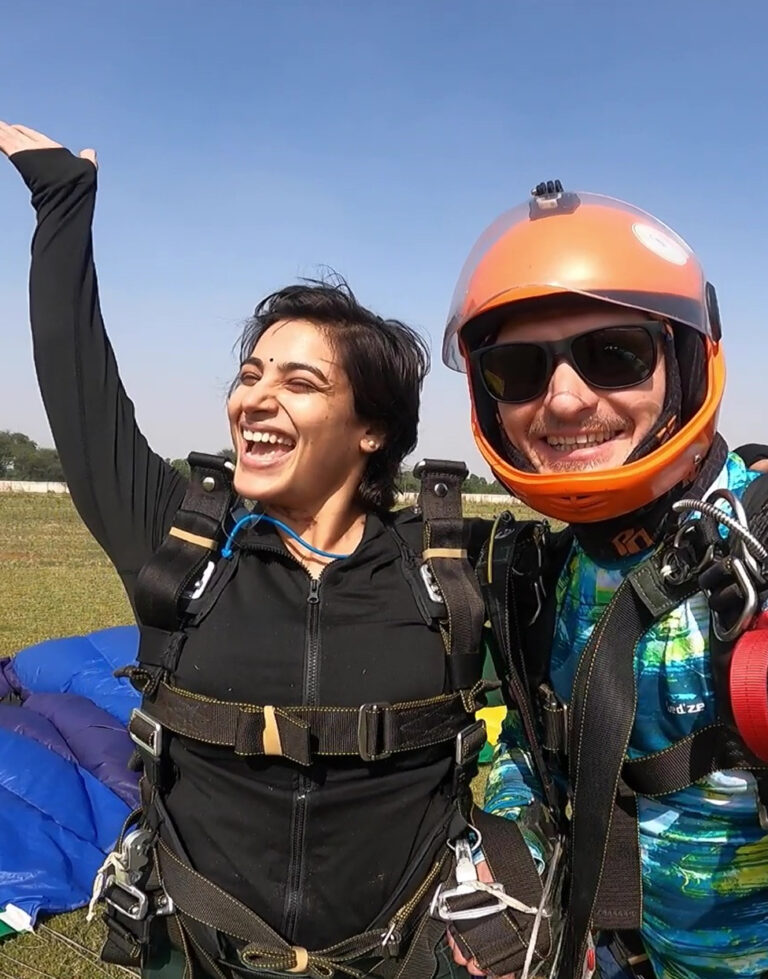
Tandem skydiving is not an end destination for those who experience it. On the contrary, tandem skydiving is only the beginning.
All certified skydiving training programs in the entire world begin with tandem skydiving. Not necessarily because of regulations that impose it, but rather because tandem skydiving provides something which cannot be acquired otherwise through ground school and classroom instruction: practical experience of being in freefall. Knowledge that is experienced and understood, not learned about through theoretical studies, knowledge of falling down from great heights and surviving this experience and realizing that this kind of survival is something extraordinary.
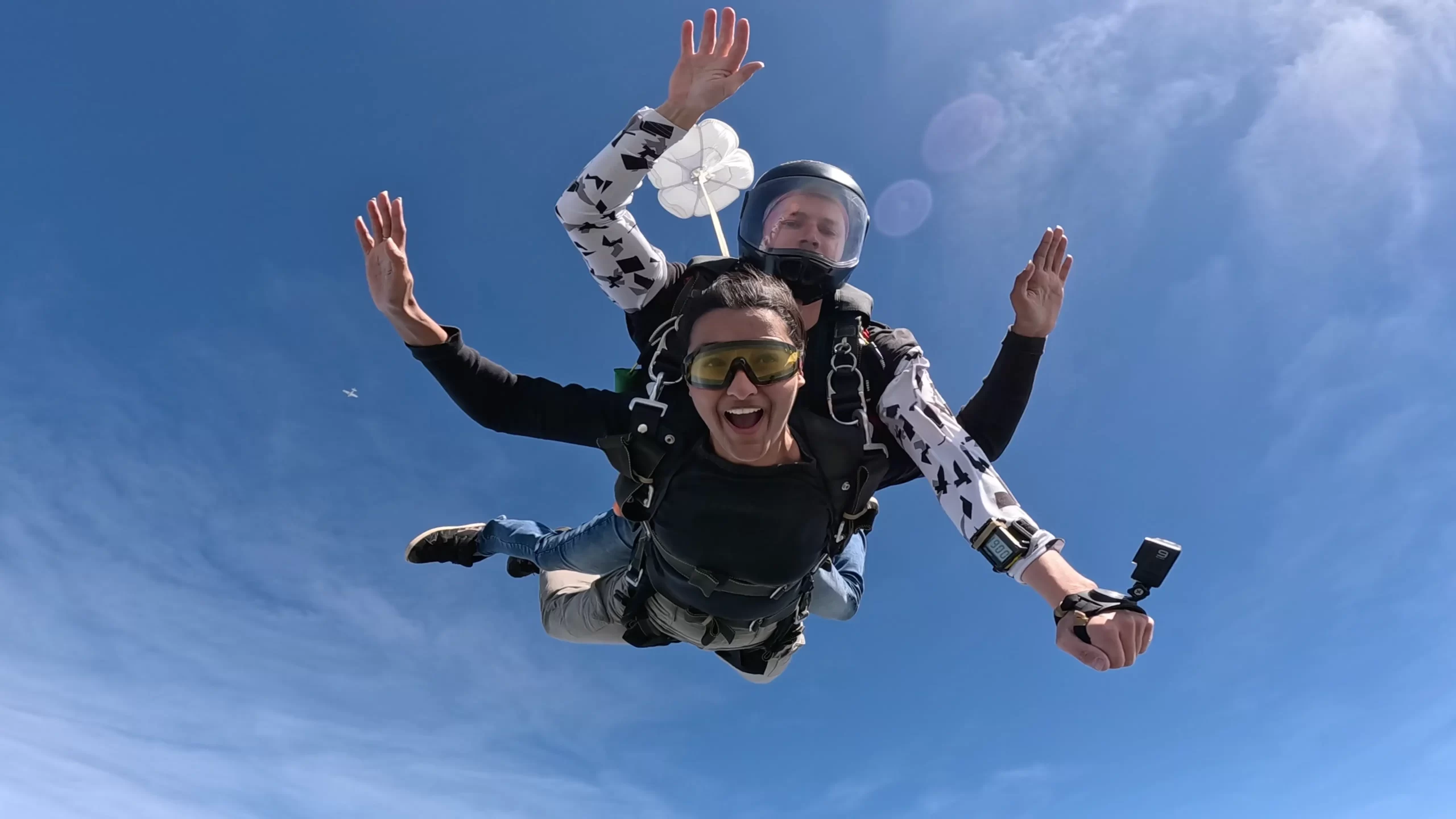
A Tandem skydiving experience cannot be seen by looking at a logbook. It lies deep inside a person’s body when the body of a person jumping tandem for the first time changes their posture during ground school classes of the second jump, when the breathing of this person becomes faster and steadier during the climb up the airplane, and when the exit becomes calmer than on the previous jump.
We have created our tandem skydiving program at Skyhigh specifically as the entry point to our Skyhigh journey. That is how all journeys at Skyhigh start.
What to Expect From Your First Tandem Skydiving Experience
Knowing exactly what to expect on your tandem skydiving day removes the anxiety of the unknown and ensures that every stage of the experience is met with preparation rather than surprise.
Arrival and registration: 30 minutes. You will check in at the Skyhigh drop zone, complete your consent and medical documentation, and be introduced to your assigned tandem skydiving instructor. Wear comfortable, weather-appropriate clothing and closed-toe laced shoes.
Ground training: 45 to 60 minutes. The most important investment of the day. Your instructor covers body position, exit technique, free-fall posture, breathing, and landing procedure. Ask every question you have; this is precisely when they belong.
Harness fitting and gear check: 15 minutes. Your tandem harness is fitted, checked, and double-checked. A final briefing before boarding.
Aircraft ascent: 15 to 20 minutes. The aircraft climbs to 10,000 feet. Use this time to settle your breathing and trust your training.
Freefall: 30 to 60 seconds. The complete tandem skydiving experience. Terminal velocity, open sky, India beneath you.
Canopy ride: 5 to 7 minutes. The parachute opens, the noise stops, and you drift above India in near-silence.
Landing, debrief, and certificate. A smooth, controlled landing guided by your instructor. Followed by your jump video, your Skyhigh certificate, and in almost every case, the immediate desire to do it again.
FAQs
Q 1. Am I just a “passenger” during a tandem jump, or do I actually have a role?
You are definitely not just a passive passenger—you are an active part of the team. While your Skyhigh instructor handles the highly technical tasks like altitude tracking, pulling the parachute, and steering, your body position is critical to a safe flight. During your ground briefing, you will learn the “banana position” for freefall stability and how to lift your legs for a smooth landing approach. Your execution of these forms is vital to a perfect jump.
Q 2. What does the freefall actually feel like? Is it like a roller coaster drop?
Not at all. A roller coaster gives you that stomach-churning, weightless drop because you are accelerating from a standstill in a pocket of stagnant air. In skydiving, you step out into a heavy, fast-moving wind column. Within seconds, you reach terminal velocity (~200 km/h), where the air resistance perfectly matches gravity. It feels less like “falling” and more like laying down on a firm, incredibly supportive cushion of air.
Q 3. Can I breathe and open my eyes normally during the 60-second freefall?
Yes. The rush of wind can feel intense at first, which causes some beginners to instinctively hold their breath. The trick is simple: open your mouth slightly or let out a loud shout as you exit the plane—this breaks the pressure and lets you breathe perfectly normally. We also provide you with tight-fitting, clear protective goggles so you can keep your eyes wide open and take in the panoramic horizon from 10,000 feet.
Q 4. How smooth is the landing? Will it hurt my knees or ankles?
Thanks to modern, high-performance square parachutes (canopies), landings today are incredibly gentle. Your instructor will execute a “flare” right before touching down, which acts like a aerodynamic brake and brings your forward momentum to a near-halt. You will be instructed to lift your knees up to your chest, allowing the instructor’s legs to touch the ground first, or you will simply slide in softly on your bottom on the drop zone grass.
More of Us


