Skydive: Why 9-to-5 India Needs Freedom of 10,000 ft Jump
Skydive: There is a particular form of fatigue carried by the Indian professional. And the weekend is no solution to it.
It is not the fatigue of physical exhaustion. Because physical exhaustion is truthful. It has a reason. The body worked. And the body sleeps.
The 9-to-5 fatigue is not like that at all. It is the fatigue of consistent self-management. Of managing tone in emails. Of judging ambition against visibility. Of demonstrating competence in an environment where vulnerability is not much safer than incompetence. It is the fatigue of being present in a presentation for eight to twelve hours a day.
It is not a complaint. It is a description. Most Indian professionals who read this will recognise this description instantly. The problem posed by it is not one of how can I get out of this? People have built this lifestyle for themselves. They appreciate this. But the question posed is much more precise.
In a life that revolves entirely around duty, what occurs that is your own?
The solution that Skyhigh India’s Narnaul drop zone in Haryana provides, just three hours from New Delhi, at an altitude of ten thousand feet from the ground, is not an escape from anything. It is a sixty-second private answer to this question.
1. The Skydive Returns Something the 9-to-5 Quietly Takes
There is something specific that the successful Indian 9-to-5 takes from the person living it. Something they do not notice is missing until something returns it.
It is genuine agency.
Not the appearance of agency. Most successful Indian professionals have considerable apparent agency. They make decisions. They manage budgets. They lead teams. They have influence.
But genuine agency acting from one’s own autonomous motivation, in genuine uncertainty, with genuinely personal stakes is rarer than the appearance suggests.
Most professional decisions are made within frameworks. Toward targets. In service of objectives that someone else set in a context that preceded the individual’s involvement. The agency is real but bounded. The choice is genuine but constrained. The decision to skydive at Skyhigh India’s Narnaul drop zone is bounded by nothing. It is constrained by nothing. It is made entirely by the person making it. For entirely personal reasons. With entirely personal consequences.
This is what genuine agency feels like.
And for many Indian professionals who skydive at Narnaul for the first time, it is the first time they have felt it in its pure, unframed, entirely personal form in longer than they can precisely identify.
2. The Skydive Delivers the Presence That the 9-to-5 Systematically Prevents
Mindfulness business in India has thousands of crores of revenue per year. Applications for meditation. Breathwork workshops. Intensive yoga. Sound healing. Forest bathing. All provide the same basic commodity through different means.
Presence.
The irony is substantial. Presence total, unmindful, ungoverned presence comes free of cost in the sixty seconds of weightlessness above Skyhigh India’s Narnaul drop zone.
That is not meditation. That doesn’t need long-term practice or any sort of discipline.
It is enforced, involuntary, complete, total presence. The particular kind of total presence that comes only from making that first jump at Skyhigh India’s Narnaul drop zone and being forced into it by the Indian professional whose mind has trained itself to be in every place but where his body happens to be.
Even the ride in the canopy over Narnaul prolongs that presence. The five to seven minutes of silence in the air over the plains. A mind that still cannot shut out the future finds itself easily settled into the present, something which has eluded all the meditation programs so far.
The rookies don’t find it exhilarating. They find it silent. And after the week they’ve just had, silence over the Haryana plains at 3,000 feet can hardly be called anything but extraordinary.
3. The Skydive Recalibrates What Risk Actually Means
The Indian professional’s relationship with risk is one of the most carefully curated aspects of their professional identity.
Risk tolerance is evaluated in interviews. Risk appetite is referenced in strategy documents. Risk management is a function, a discipline, and in many organisations an entire team.
The language of risk has become so sophisticated and so institutionally embedded that it has, for many professionals, almost entirely replaced the simpler experience of actually feeling risk in the body.
The skydive at Skyhigh India’s Narnaul drop zone is not managed risk in the institutional sense. It is experienced risk. Felt in the body. Resolved through a personal decision. Not a committee recommendation.
The risk is real. But it is managed by Skyhigh India‘s DGCA-certified operational framework. By the internationally licensed instructors at the Narnaul drop zone. By the dual parachute system, the Automatic Activation Device, and the weather protocol that no jump clears until conditions meet strict operational minimums.
After Narnaul, these decisions look different.
Not because the risks have changed. But because the person evaluating them has updated their reference point for what genuine risk feels like in the body. And discovered that what they had been calling risk in the professional context was, by comparison, considerably more manageable.
4. The Skydive Gives the 9-to-5 Indian the Story That Nothing Else Can
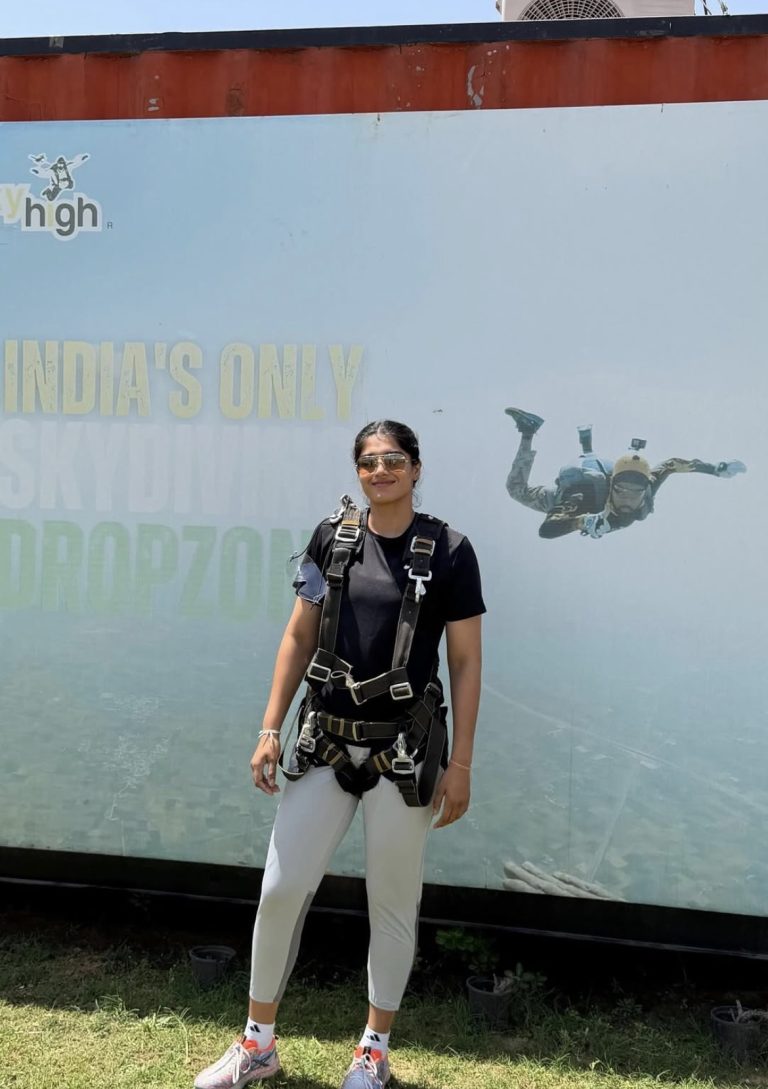
The Indian professional’s CV is a carefully curated narrative. Things done within institutional frameworks. Toward institutional objectives. In service of institutional goals.
These are real achievements. They belong on CVs. They contribute to professional identity exactly as intended.
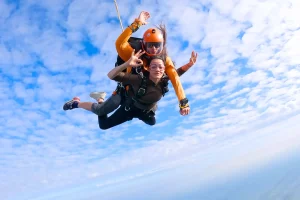
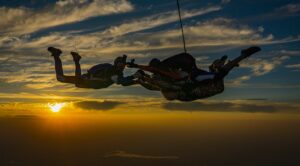
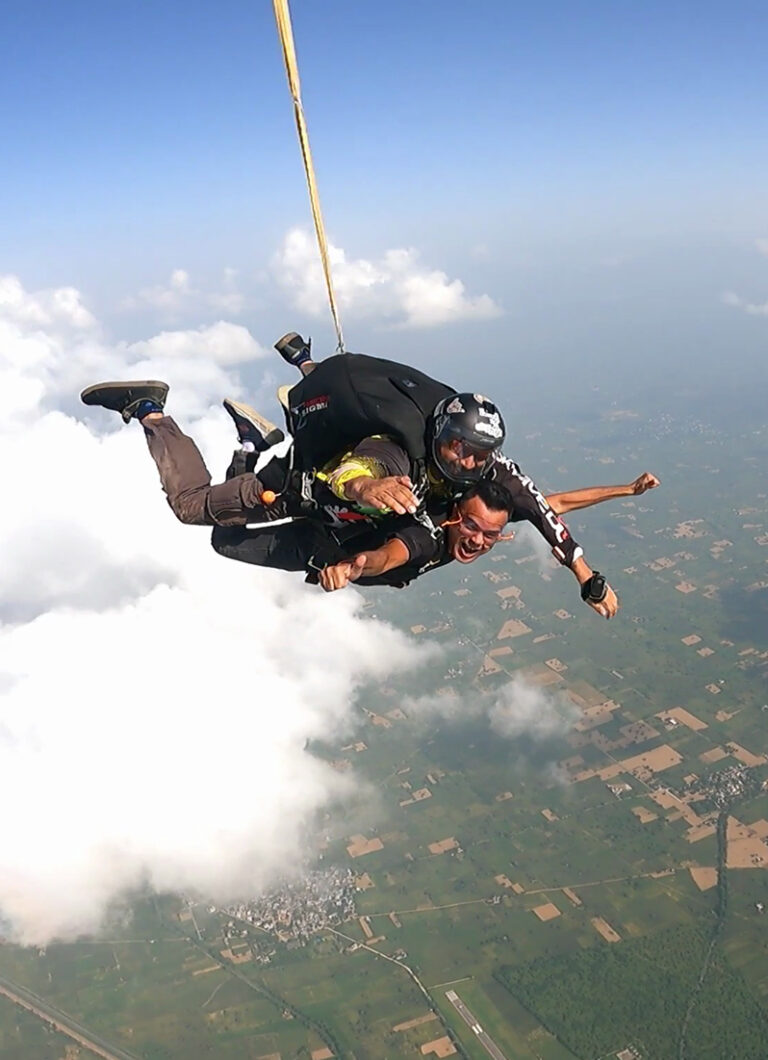
But the story of standing at the Narnaul aircraft door above the Haryana plains. Of feeling the specific quality of fear that 10,000 feet produces. Of making the private decision in the two seconds between the tap and the exit. Of experiencing sixty seconds of freefall above India’s extraordinary north Indian landscape.
This story belongs to the person who lived it. To nobody else. To no institutional context. To no performance review.
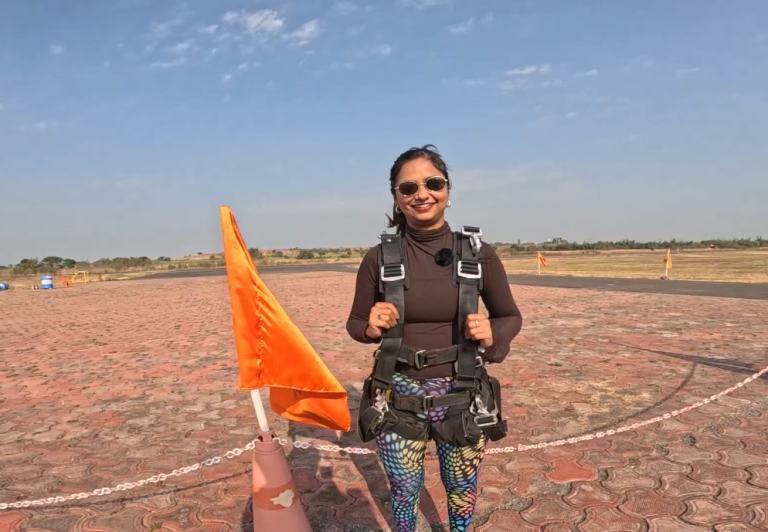
It is the story told at the dinner table. Not because it advances a professional narrative. But because it is genuinely, privately, personally extraordinary.
It is the story the person’s children will ask to hear again. Not because it is the most impressive thing their parent achieved. But because it is the most honest one.
This is what the 9-to-5 Indian carries home from Skyhigh India’s Narnaul drop zone. The story that belongs only to them. That no framework produced. That no objective required.
The story of the moment they leapt.
5. The Experience Proves the Person Exists Outside their Job Role
The deepest reason why 9-to-5 India needs the freedom of a 10,000-foot skydive is one most first-timers do not arrive at consciously.
But they articulate it, in some form, in the conversation that follows their landing at Narnaul.
The role is not the person.
This sounds obvious. Of course the senior manager is not the management role. Of course the analyst is more than the analysis function.
But the sustained, absorbing, identity-shaping demands of the Indian professional 9-to-5 the years of building expertise in a specific domain, the gradual alignment of schedule, social life, vocabulary, aspiration, and self-conception with the professional role have a way of making the theoretical distinction between person and role experientially difficult to access.
The person at the Narnaul aircraft door in the two seconds before exit is not a professional. They are not a function or a role or a deliverable. They are a human being. At altitude. In freefall above the Indian plains. Discovering the most direct and physical way available that the self which exists outside the role is not just real.
It is extraordinary.
This discovery, felt in the body at 10,000 feet rather than understood in the mind at desk level, is one of the most lasting outcomes of a first skydive at Narnaul. The Indian professional who lands at Skyhigh India’s landing field carries it back to the office on Monday morning.
And it changes in subtle and durable ways how they relate to the role. To the demands it makes. And to the question of what else they might be capable of that the role has not yet required of them.
FAQs
Is the Skyhigh Narnaul skydive accessible as a day trip from Delhi?
Yes. Skyhigh India’s Narnaul drop zone is approximately 130 kilometres from central Delhi. It is accessible via the NH48 in 2.5 to 3 hours. A 6:00 AM to 6:30 AM departure allows you to arrive at Narnaul by 9:00 AM to 9:30 AM. The complete skydive day concludes by early afternoon, making a return to Delhi comfortably achievable by evening.
How much does a skydive at Skyhigh’s Narnaul drop zone cost?
Skyhigh India’s certified tandem packages at the Narnaul drop zone are priced between ₹25,000 and ₹40,000 all-inclusive. Ground training, a certified instructor, all safety equipment, the jump from 10,000 feet, and a Skyhigh landing certificate are all included. No hidden charges are added on the skydive day.
Do I need any experience for a skydive at Narnaul?
No prior experience is required. No specific fitness level is required either. The tandem format places no meaningful athletic demands on the participant. Provided you are 16 or older, weigh within 90 to 100 kilograms, and are in good general health with no disqualifying medical conditions, you are fully eligible to skydive at Narnaul with Skyhigh.
What makes the skydive at Skyhigh Narnaul safe?
Every skydive at Skyhigh’s Narnaul drop zone operates under DGCA certification. Instructors hold current USPA ratings with a minimum of 500 solo jumps. Every tandem rig includes a primary parachute, an independently packed reserve, and an Automatic Activation Device (AAD). Weather metrics are thoroughly assessed against strict operational minimums every jump morning.
More of Us